
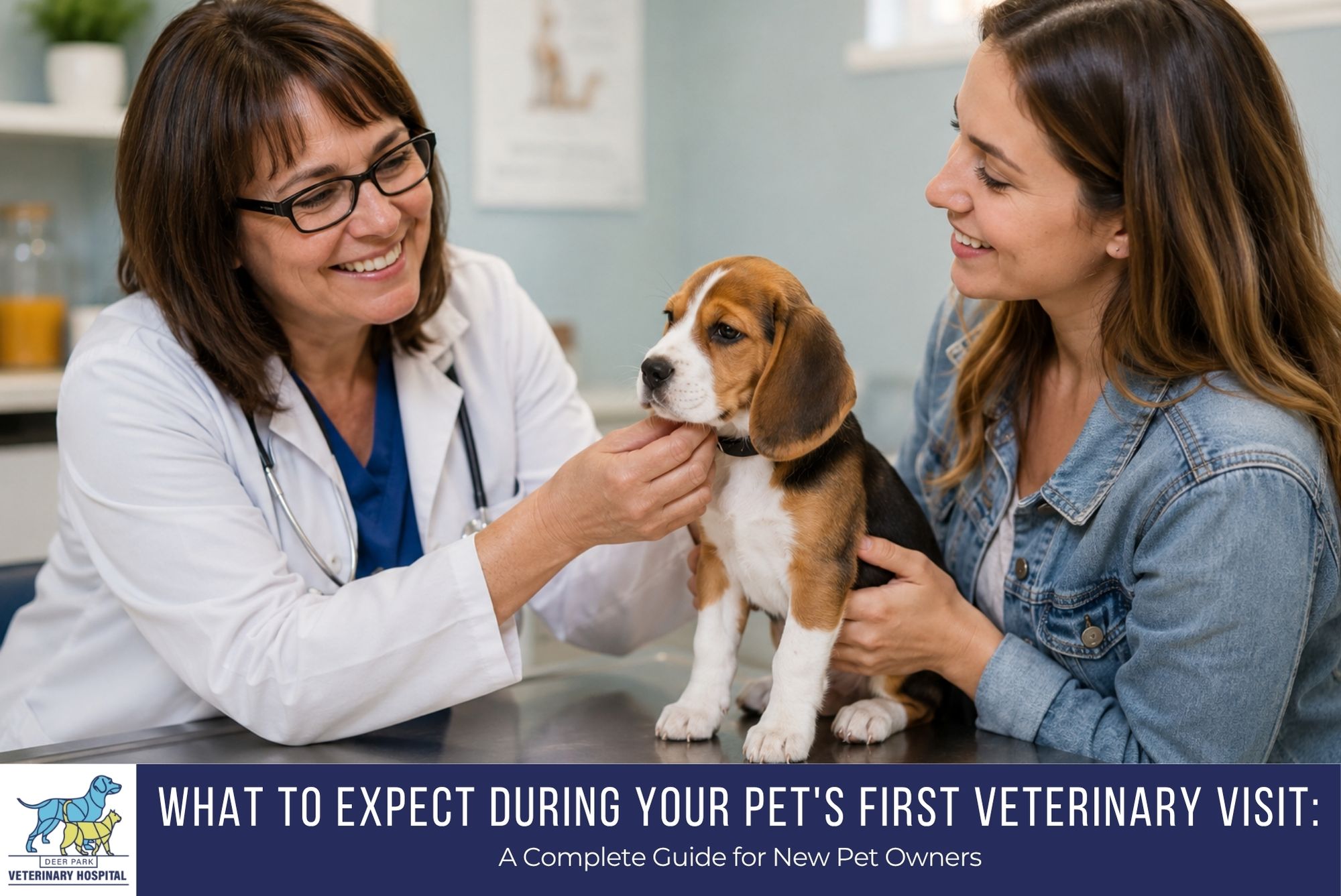
Bringing home a new puppy, kitten, dog, or cat is an exciting milestone, and scheduling your pet’s first veterinary visit is one of the most important steps you can take to ensure a lifetime of good health. Your pet’s first appointment establishes a medical baseline, identifies any early health concerns, begins preventive care, and gives you the opportunity to build a trusted relationship with your veterinary team.
At Deer Park Veterinary Hospital, we are committed to helping new pet owners feel informed and confident. Whether you’ve adopted a rescue pet or welcomed a young puppy or kitten into your family, understanding what happens during the first veterinary visit can help you prepare and make the experience as stress-free as possible.
Why Your Pet’s First Veterinary Visit Is So Important
The first veterinary visit lays the foundation for your pet’s lifelong healthcare. Even pets that appear healthy can have underlying conditions that are not immediately visible. A comprehensive physical examination allows your veterinarian to evaluate your pet’s overall health, detect congenital or developmental concerns, discuss preventive care, and create a personalized wellness plan.
Early veterinary care helps:
- Detect health issues before they become serious
- Establish vaccination schedules
- Discuss parasite prevention
- Monitor healthy growth and development
- Provide nutritional guidance
- Address behavioral concerns
- Create lifelong preventive healthcare plans
Regular veterinary visits are one of the most effective ways to help pets enjoy longer, healthier lives.
Scheduling Your Pet’s First Appointment
When Should Puppies Visit the Veterinarian?
Most puppies should have their first veterinary examination between six and eight weeks of age. Puppies typically require a series of vaccinations every few weeks until approximately 16 weeks old.
When Should Kittens Visit the Veterinarian?
Kittens should also be examined around six to eight weeks of age. Like puppies, kittens receive a series of vaccinations during their first few months of life.
Adult Pets That Are Newly Adopted
If you’ve adopted an adult dog or cat, schedule a veterinary visit within the first week of bringing them home. Even if the shelter or rescue provided medical records, your veterinarian should perform a complete examination to assess your pet’s current health and establish ongoing care.
Preparing Before Your Appointment
Gather Medical Records
If your pet came from a breeder, shelter, rescue, or previous owner, bring any available records, including:
- Vaccination history
- Deworming treatments
- Previous laboratory results
- Surgical records
- Current medications
- Microchip information
Bring a Stool Sample
A fresh fecal sample allows your veterinarian to test for intestinal parasites, many of which can be present even when pets show no symptoms.
Transport Your Pet Safely
Cats should always travel in a secure carrier lined with a familiar towel or blanket.
Dogs should arrive on a properly fitted leash and collar or harness.
Bringing treats and favorite toys can help reduce anxiety during the visit.
What Happens During the Physical Examination?
Nose-to-Tail Evaluation
Your veterinarian performs a thorough physical examination that includes evaluating:
- Eyes
- Ears
- Nose
- Mouth and teeth
- Skin and coat
- Heart
- Lungs
- Abdomen
- Lymph nodes
- Joints
- Muscles
- Spine
- Weight
- Body condition
- Temperature
This comprehensive assessment helps identify abnormalities and provides valuable baseline information for future visits.
Weight and Growth Assessment
Maintaining a healthy weight is critical throughout your pet’s life. Your veterinarian records your pet’s weight and body condition score and discusses healthy growth expectations.
For puppies and kittens, growth is carefully monitored during each visit.
Vaccinations Your Pet May Receive
Vaccinations protect pets from serious and potentially life-threatening diseases.
Core Vaccines for Dogs
Your veterinarian may recommend:
- Distemper
- Parvovirus
- Adenovirus
- Rabies
Additional vaccines may include Bordetella, Leptospirosis, Lyme disease, or canine influenza depending on your dog’s lifestyle and risk factors.
Core Vaccines for Cats
Core feline vaccines often include:
- Feline Viral Rhinotracheitis
- Calicivirus
- Panleukopenia
- Rabies
Lifestyle factors may also influence recommendations for feline leukemia vaccination.
Your veterinarian will explain which vaccines are appropriate based on your pet’s age, health, and environment.
Parasite Prevention Starts Early
Internal Parasites
Puppies and kittens commonly carry intestinal parasites. Fecal testing helps identify worms or protozoal infections that require treatment.
Fleas, Ticks, and Heartworms
Year-round parasite prevention is an important part of preventive veterinary care in Southwest Ohio.
Your veterinarian will discuss protection against:
- Fleas
- Ticks
- Heartworms
- Intestinal parasites
Preventive medications are safer, less expensive, and more effective than treating advanced parasite-related illnesses.
Nutrition and Feeding Recommendations
Proper nutrition supports healthy growth, immune function, and long-term wellness.
Your veterinarian will discuss:
Choosing the Right Food
Not all pet foods are created equal. Your veterinarian can recommend diets appropriate for your pet’s:
- Age
- Breed
- Size
- Activity level
- Medical needs
Feeding Schedules
Puppies and kittens typically require multiple meals each day, while adult pets often transition to twice-daily feeding schedules.
Maintaining appropriate portion sizes helps prevent obesity later in life.
Behavior and Socialization Guidance
The first veterinary visit is an excellent opportunity to discuss your pet’s behavior.
Topics often include:
House Training
Veterinarians can provide realistic expectations and recommendations for successful house training.
Socialization
Proper early socialization helps puppies and kittens become confident, well-adjusted adult pets.
Common Behavioral Questions
Your veterinarian can discuss:
- Chewing
- Scratching
- Jumping
- Separation anxiety
- Crate training
- Litter box habits
- Introducing pets to children
- Introducing pets to other animals
Early intervention can prevent unwanted behaviors from becoming long-term challenges.
Dental Health Begins Early
Oral health affects your pet’s entire body.
During the examination, your veterinarian checks for:
- Proper tooth development
- Bite alignment
- Retained baby teeth
- Gum health
You’ll also learn how to begin brushing your pet’s teeth at home and discuss products that support lifelong dental health.
Microchipping and Identification
Permanent identification greatly increases the likelihood of being reunited with a lost pet.
If your pet is not already microchipped, your veterinarian may recommend placement during an appointment. Microchipping is a simple, safe procedure that provides lifelong identification.
Spaying and Neutering Discussion
Your veterinarian will discuss the appropriate timing for spaying or neutering based on your pet’s:
- Age
- Breed
- Overall health
- Lifestyle
These procedures provide health and behavioral benefits while helping reduce pet overpopulation.
Questions Every New Pet Owner Should Ask
Your first veterinary visit is the perfect opportunity to ask questions.
Consider discussing:
What vaccinations does my pet need?
Understanding your pet’s vaccination schedule helps ensure complete protection.
What parasite preventives do you recommend?
Different pets have different risk factors depending on their lifestyle and environment.
What food should I feed?
Nutrition recommendations vary based on breed, age, and health.
How often should my pet have wellness exams?
Routine preventive care allows veterinarians to monitor your pet’s health throughout every stage of life.
What signs of illness should I watch for?
Knowing when to seek veterinary care helps prevent minor problems from becoming serious.
Building a Lifetime Partnership With Your Veterinarian
Veterinary medicine is about much more than treating illness. Preventive care allows veterinarians to monitor changes over time, identify problems earlier, and provide personalized recommendations throughout every life stage.
From puppyhood and kittenhood through the senior years, regular veterinary visits help ensure your companion enjoys the highest possible quality of life.
At Deer Park Veterinary Hospital, we believe every pet deserves compassionate, comprehensive care from the very beginning. We are proud to partner with families throughout Cincinnati by providing preventive medicine, diagnostics, vaccinations, nutrition counseling, dental care, and personalized wellness plans that support healthy, happy pets for years to come.
Frequently Asked Questions
How long does a first veterinary appointment usually take?
Most first appointments last approximately 30 to 60 minutes, depending on your pet’s age, health, and whether vaccinations or diagnostic testing are performed.
Should I feed my pet before the appointment?
Unless your veterinarian provides different instructions, feeding a normal meal is generally acceptable. Bringing treats can also help create a positive experience.
What if my pet is nervous?
Many pets are anxious during their first visit. Bringing familiar blankets, favorite treats, and remaining calm yourself can help reduce stress. Veterinary teams are experienced in helping nervous pets feel comfortable.
Can I bring my children to the appointment?
Yes. Veterinary visits can be valuable learning experiences for children. Helping them participate in their pet’s healthcare encourages responsible pet ownership.
Will my pet receive vaccinations during the first visit?
If your pet is healthy and vaccinations are due, they are often administered during the first appointment. Your veterinarian will determine the safest schedule based on your pet’s age and medical history.
Does my pet need bloodwork during the first visit?
Routine bloodwork may be recommended depending on your pet’s age, medical history, or physical examination findings. Baseline testing can provide valuable information about your pet’s overall health.
How often should my pet visit the veterinarian after the first appointment?
Puppies and kittens typically require several visits during their first few months for vaccinations and growth monitoring. Healthy adult pets generally benefit from annual wellness examinations, while senior pets often benefit from more frequent visits.
What should I bring to my pet’s first veterinary appointment?
Bring any previous medical records, vaccination documentation, a fresh stool sample if possible, a list of medications or supplements, and any questions you have about your pet’s care.
Why is preventive care better than waiting until my pet gets sick?
Preventive care helps detect health issues earlier, often before symptoms develop. Early diagnosis and treatment frequently lead to better outcomes, improved quality of life, and lower long-term healthcare costs.
What should I do if my pet becomes ill before the scheduled appointment?
If your pet develops vomiting, diarrhea, difficulty breathing, lethargy, loss of appetite, or other concerning symptoms before the appointment, contact your veterinarian immediately. Some conditions require prompt medical attention.
Contact Information
Deer Park Veterinary Hospital
4380 E Galbraith Rd
Cincinnati, OH 45236
Phone: (513) 791-8550
Website: https://dpvh.net
Request An Appointment: https://dpvh.net/appointments