
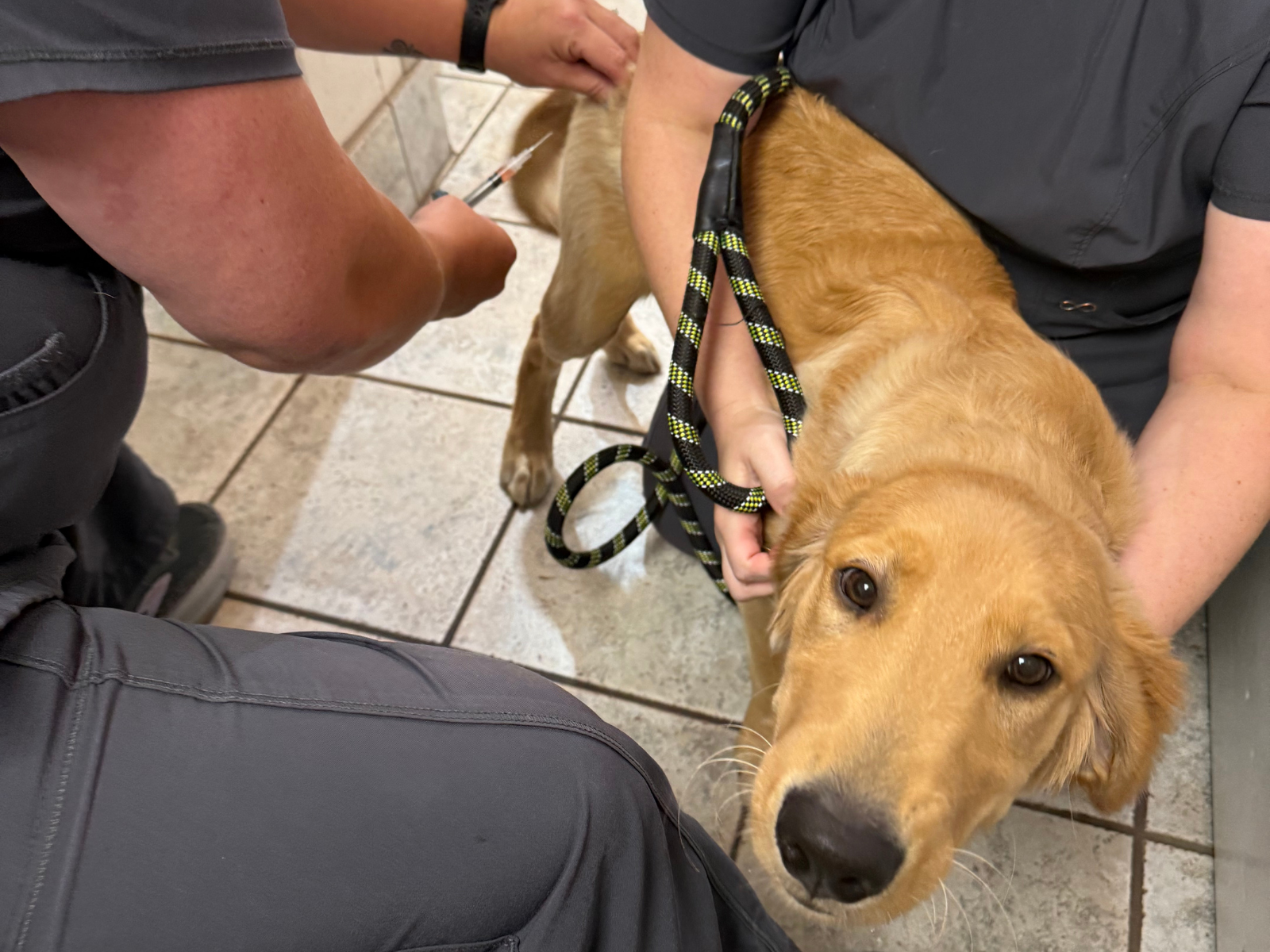
Dog & Cat Vaccinations in Cincinnati, OH
Many of the most serious diseases affecting dogs and cats are entirely preventable with the right vaccinations on the right schedule. At Deer Park Veterinary Hospital in Cincinnati, OH, our knowledgeable team will guide you through setting up a vaccination plan that keeps your pet protected at every stage of life — from their first puppy or kitten visit through their senior years.
Request an Appointment
Vaccines for Dogs
Puppies receive a series of vaccines beginning at 8 weeks of age and continuing through 16 weeks. The core puppy vaccine series at DPVH covers:
- Distemper
- Hepatitis
- Parvovirus
- Parainfluenza
- Bordetella (kennel cough)
- Leptospirosis
- Rabies
Adult dogs that have completed their puppy vaccine series receive booster vaccines at one year of age along with a heartworm test. After that, the following schedule applies:
- Leptospirosis + heartworm test: Annually
- Bordetella: Every 6–12 months depending on exposure risk
- Distemper, hepatitis, parvovirus, parainfluenza, and rabies: Every three years

Vaccines for Cats
For kittens, we recommend a vaccine series beginning at 8 weeks and continuing through 16 weeks of age. The core kitten series at DPVH covers:
- Feline rhinotracheitis
- Calicivirus
- Panleukopenia
- Chlamydia
- Feline leukemia (FeLV)
- Rabies
We also advise that all kittens be tested for feline leukemia (FeLV) and FIV at or after 11 weeks of age before starting the leukemia vaccine series.
Adult cats that have completed their kitten vaccine series and FeLV/FIV testing will receive booster vaccines at one year of age. After that:
- Distemper (FVRCP) and rabies: Annually
- Feline leukemia: Every three years
Why Staying Current on Vaccines Matters
Vaccines don’t just protect your pet — they protect other animals in your household and your community. Many vaccine-preventable diseases like parvovirus and distemper can survive in the environment for extended periods, meaning unvaccinated pets can be exposed even without direct contact with a sick animal. Keeping your pet’s vaccines up to date is one of the simplest and most effective ways to protect them.
Vaccinations are administered as part of your pet’s routine wellness visits, giving our veterinarians an opportunity to perform a complete physical exam, discuss any concerns, and ensure your pet’s overall health is on track. If you’re unsure of your pet’s current vaccine status, bring any previous records to your appointment and our team will help you get caught up safely.
For a complete overview of recommended vaccines and schedules, download our Vaccine Booklet or call us at (513) 791-8550.
Frequently Asked Questions About Pet Vaccinations
When should puppies and kittens start their vaccines?
Vaccine series for both puppies and kittens begin at 8 weeks of age. Vaccines are given in a series of appointments spaced 3–4 weeks apart through 16 weeks of age. Starting on time is important to build immunity during the window when maternal antibodies (passed from mom) are wearing off and your young pet is most vulnerable to disease.
Does my indoor-only cat need vaccines?
Yes. Even cats that never go outdoors can be exposed to viruses brought in on clothing or shoes, and through contact with other pets in the household. Rabies vaccination is required by law in most areas regardless of your cat’s lifestyle. Our veterinarians can help you determine which vaccines are most important for your specific cat based on their environment and risk factors.
How often does my adult dog need vaccines?
Core vaccines like distemper, hepatitis, parvovirus, and parainfluenza are given every three years for adult dogs after the initial puppy series and first-year boosters. Leptospirosis and heartworm testing are done annually. Bordetella (kennel cough) is recommended every 6–12 months depending on your dog’s exposure to other dogs, such as at boarding facilities, dog parks, or groomers.
What is leptospirosis and why does my dog need it every year?
Leptospirosis is a bacterial disease spread through the urine of infected wildlife and contaminated water. It can be contracted by dogs during walks, hikes, or any outdoor activity — and it can also be transmitted to humans. Because the vaccine’s protective immunity wanes over time, annual boosters are recommended for dogs in our region. Learn more about keeping your dog protected on our dog preventive care page.
What is the difference between a core and non-core vaccine?
Core vaccines are recommended for all pets regardless of lifestyle, because the diseases they prevent are widespread, severe, or transmissible to humans (such as rabies and distemper). Non-core vaccines — like Bordetella or leptospirosis — are recommended based on your pet’s individual risk factors and lifestyle. Our veterinarians will recommend the right combination for your pet at each visit.
Is it safe to vaccinate a sick pet?
Generally, vaccines should not be administered to a pet that is currently ill, as the immune system needs to be healthy to mount an effective response. If your pet is unwell on the day of their scheduled vaccine appointment, our veterinarians will evaluate them and determine whether to proceed or reschedule. Your pet’s safety always comes first.
What should I expect after my pet receives vaccines?
Mild side effects such as temporary soreness at the injection site, mild lethargy, or a slight decrease in appetite for 24–48 hours are normal and generally resolve on their own. Serious allergic reactions are rare but can occur — if you notice facial swelling, vomiting, difficulty breathing, or collapse after vaccination, contact us immediately at (513) 791-8550.