
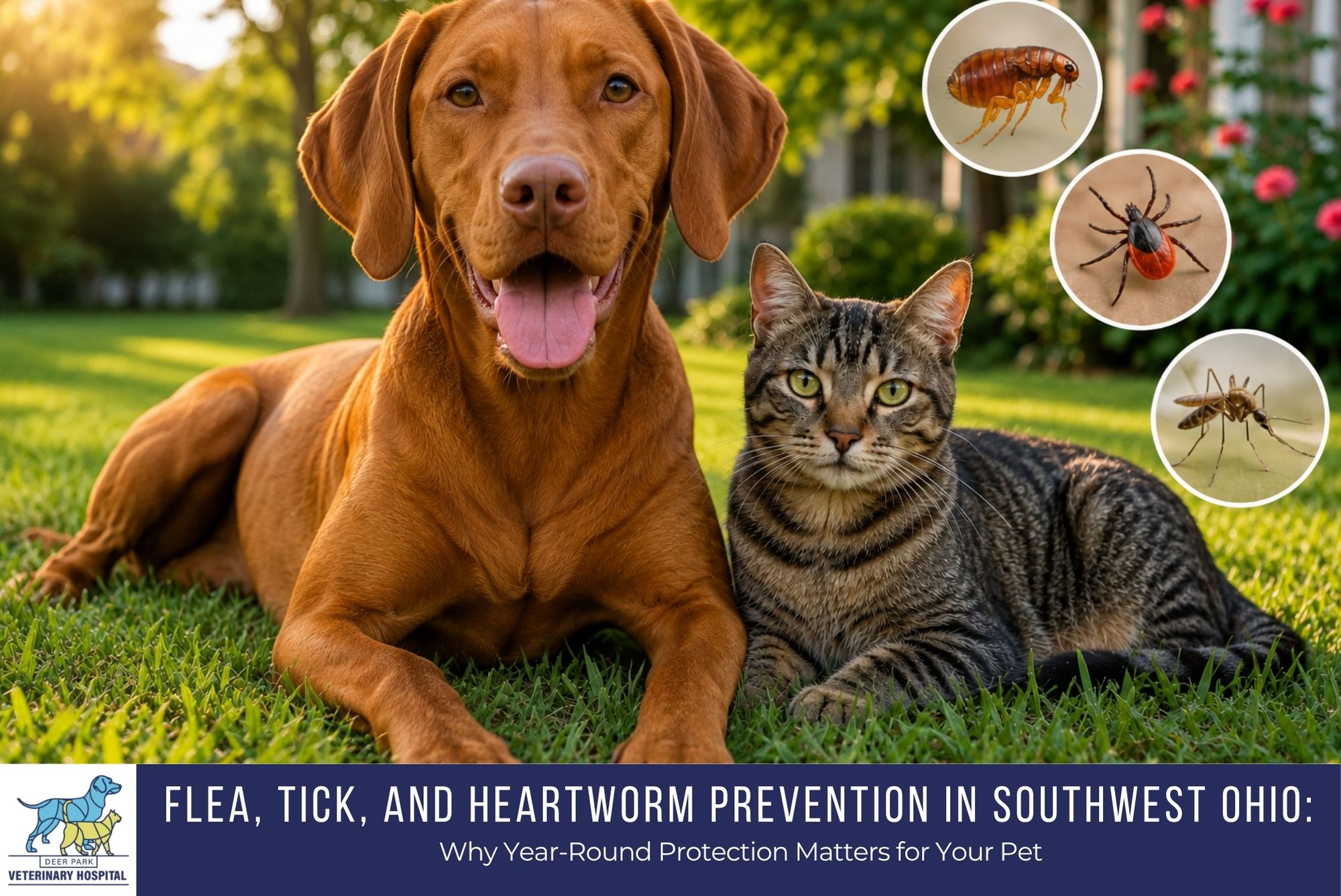
 Understanding Parasite Risks for Pets in Southwest Ohio
Living in Southwest Ohio offers many opportunities for pets to enjoy parks, hiking trails, backyards, and outdoor adventures. However, these environments also expose dogs and cats to parasites that can cause serious health problems. Fleas, ticks, and heartworms are more than seasonal nuisances—they can transmit diseases, cause chronic illness, and even become life-threatening if left untreated.
At Deer Park Veterinary Hospital, we believe preventive veterinary care is the most effective way to protect your pet from parasites throughout the year. With advances in veterinary medicine, today’s preventive medications are safer, more effective, and easier to administer than ever before.
Understanding the risks associated with fleas, ticks, and heartworms allows pet owners to make informed decisions that keep their companions healthy in every season.
Why Year-Round Parasite Prevention Is Essential
Many pet owners assume parasite prevention is only necessary during the warmer months. While parasite activity increases during spring and summer, Southwest Ohio experiences enough mild weather throughout the year to support flea, tick, and mosquito populations beyond traditional seasons.
Indoor pets are not immune either. Fleas can hitchhike into homes on clothing, shoes, or other pets. Mosquitoes can easily enter houses and transmit heartworm disease indoors. Ticks remain active during surprisingly cool temperatures whenever the ground is not frozen.
Maintaining continuous protection throughout the year significantly reduces the risk of infestation and prevents interruptions that could leave pets vulnerable.
Fleas: Small Parasites That Cause Big Problems
How Fleas Affect Dogs and Cats
Fleas are external parasites that survive by feeding on your pet’s blood. Even a small flea population can rapidly become a large infestation because adult fleas reproduce quickly.
Flea infestations commonly cause:
- Intense itching
- Excessive scratching
- Hair loss
- Red, irritated skin
- Flea allergy dermatitis
- Skin infections
- Tapeworm infections
- Anemia in puppies, kittens, and small pets
Pets with flea allergies often experience severe itching from only a few flea bites.
Signs Your Pet May Have Fleas
Watch for symptoms including:
- Frequent scratching
- Biting or chewing at the skin
- Black specks (“flea dirt”) in the coat
- Visible fleas moving through the fur
- Hair thinning near the tail
- Skin redness
- Restlessness
Early treatment prevents infestations from spreading throughout your home.
Ticks: More Than Just an Outdoor Pest
Common Tick Species in Ohio
Several tick species are commonly found throughout Southwest Ohio, including:
- American Dog Tick
- Blacklegged Tick (Deer Tick)
- Lone Star Tick
- Brown Dog Tick
These parasites attach to animals while they walk through grass, wooded areas, parks, and even suburban yards.
Diseases Ticks Can Transmit
Ticks are capable of transmitting numerous diseases that affect both pets and humans.
Potential tick-borne illnesses include:
- Lyme disease
- Ehrlichiosis
- Anaplasmosis
- Rocky Mountain spotted fever
- Babesiosis
Some infections produce only mild symptoms initially, while others can result in chronic joint disease, kidney damage, neurological complications, or severe illness if not treated promptly.
Signs of Tick-Borne Illness
Symptoms may include:
- Fever
- Lethargy
- Joint pain
- Limping
- Swollen lymph nodes
- Loss of appetite
- Weakness
- Changes in behavior
Veterinary evaluation is important whenever these symptoms develop following tick exposure.
Heartworm Disease: A Silent but Serious Threat
What Is Heartworm Disease?
Heartworm disease is caused by parasitic worms transmitted through mosquito bites. Once inside the body, immature worms migrate through the bloodstream and eventually mature within the heart, lungs, and major blood vessels.
Heartworms interfere with normal circulation and can permanently damage the cardiovascular and respiratory systems.
Why Prevention Is Better Than Treatment
Unlike many parasites, heartworm disease is significantly easier to prevent than to treat.
Treatment for dogs requires multiple injections, months of restricted activity, repeated veterinary visits, and careful monitoring. During treatment, dying worms can create dangerous complications.
Cats present an even greater challenge because there is currently no approved treatment that eliminates adult heartworms. Veterinary care focuses primarily on supportive management and symptom control.
Routine monthly prevention remains the safest, most effective option.
How Mosquitoes Spread Heartworm Disease
Mosquitoes become infected after feeding on an animal carrying heartworms. When they bite another pet, microscopic heartworm larvae enter the bloodstream and begin developing over several months.
Since mosquitoes are widespread throughout Southwest Ohio during much of the year—and may remain active during mild winters—consistent prevention is essential.
Even indoor pets can become infected because mosquitoes frequently enter homes.
Local Factors That Increase Parasite Exposure
Southwest Ohio’s Climate
The Cincinnati area provides favorable conditions for parasites because of:
- Moderate rainfall
- Humid summers
- Mild spring and fall temperatures
- Wooded neighborhoods
- Parks and hiking trails
- Rivers and wetlands
- Abundant wildlife populations
Wildlife such as deer, raccoons, foxes, squirrels, rabbits, and rodents help maintain flea and tick populations throughout the region.
Pets at Higher Risk
Some pets face greater exposure, including:
- Dogs that hike frequently
- Hunting dogs
- Pets visiting dog parks
- Pets attending daycare
- Outdoor cats
- Pets living near wooded areas
- Pets spending significant time in tall grass
However, every dog and cat should receive parasite prevention regardless of lifestyle.
Preventing Fleas, Ticks, and Heartworms
Monthly Preventive Medications
Veterinarians recommend preventive medications that are administered consistently throughout the year.
Depending on your pet’s needs, prevention may include:
- Oral chewable medications
- Topical treatments
- Long-lasting injectable heartworm prevention
- Combination medications that protect against multiple parasites
Your veterinarian can recommend the most appropriate product based on your pet’s:
- Age
- Weight
- Medical history
- Lifestyle
- Travel habits
- Risk factors
Regular Veterinary Wellness Exams
Annual or semiannual wellness visits help ensure parasite prevention remains effective.
Routine examinations allow veterinarians to:
- Detect parasites early
- Perform heartworm testing
- Evaluate skin health
- Recommend updated prevention plans
- Address new parasite concerns in the region
Additional Ways to Reduce Parasite Exposure
Although medications provide the strongest protection, environmental management also helps reduce parasite exposure.
Helpful practices include:
Maintain Your Yard
Keep grass trimmed, remove leaf piles, reduce brush, and eliminate standing water where mosquitoes breed.
Perform Tick Checks
After walks or outdoor activities, carefully inspect your pet around:
- Ears
- Neck
- Face
- Between the toes
- Under the collar
- Groin
- Tail
Prompt removal reduces the chance of disease transmission.
Wash Bedding Regularly
Cleaning pet bedding and vacuuming frequently helps reduce flea populations inside the home.
Protect All Household Pets
If one pet receives prevention while another does not, parasites can continue circulating throughout the household.
The Importance of Heartworm Testing
Even pets receiving preventive medication should undergo routine heartworm testing as recommended by their veterinarian.
Testing helps identify:
- Missed doses
- Medication failure
- Undetected infections
- Appropriate continuation of preventive care
Early detection improves treatment success if infection occurs.
Common Misconceptions About Parasite Prevention
“My Pet Stays Indoors.”
Indoor pets remain vulnerable to fleas, mosquitoes, and even ticks that enter the home on people or other animals.
“I Only Need Prevention During Summer.”
Parasites can remain active throughout much of the year in Southwest Ohio. Consistent protection offers the greatest safety.
“I Never See Fleas or Ticks.”
Many infestations begin before owners notice visible parasites. Preventive medications work before large infestations develop.
“Heartworm Disease Is Rare.”
Heartworm disease continues to occur throughout Ohio. Because mosquitoes are widespread, every unprotected pet remains at risk.
The Long-Term Benefits of Preventive Veterinary Care
Preventing parasites protects more than your pet’s comfort. Consistent prevention helps:
- Reduce expensive emergency treatments
- Prevent chronic illness
- Protect skin health
- Lower the risk of infectious diseases
- Improve quality of life
- Extend healthy longevity
Preventive medicine is one of the most valuable investments pet owners can make in their companion’s lifelong health.
Frequently Asked Questions
Do dogs and cats both need flea prevention?
Yes. Both dogs and cats can develop flea infestations, skin irritation, allergic reactions, and tapeworm infections caused by fleas.
Can indoor pets get heartworms?
Yes. Mosquitoes commonly enter homes and can transmit heartworm disease to indoor pets.
How often should my pet receive parasite prevention?
Most preventive medications are administered monthly, although some injectable options provide longer-lasting protection. Your veterinarian will recommend the best schedule.
Can I stop prevention during winter?
Veterinarians generally recommend year-round prevention because fleas, ticks, and mosquitoes may remain active during mild Ohio winters.
What should I do if I find a tick on my pet?
Remove the tick carefully using fine-tipped tweezers or a tick-removal device and contact your veterinarian if your pet develops symptoms such as fever, lethargy, or limping.
Are flea and tick products safe?
When prescribed or recommended by your veterinarian and used according to label instructions, FDA- and EPA-approved preventive products are considered safe and highly effective for most pets.
Why does my pet need annual heartworm testing if they take prevention?
Routine testing helps confirm your pet remains heartworm-free and identifies infections early if doses were missed or prevention failed.
What happens if heartworm disease goes untreated?
Untreated heartworm disease can lead to heart failure, lung damage, reduced quality of life, and death. Prevention is far safer and less expensive than treatment.
Can fleas infest my home?
Yes. Adult fleas lay eggs that spread into carpets, furniture, bedding, and cracks in flooring, making infestations difficult to eliminate without prompt treatment.
How can Deer Park Veterinary Hospital help protect my pet?
Our veterinary team develops personalized parasite prevention plans based on your pet’s age, lifestyle, health status, and risk factors while providing routine wellness care, heartworm testing, and ongoing guidance for year-round protection.
Contact Information
Deer Park Veterinary Hospital
4380 E Galbraith Rd
Cincinnati, OH 45236
Phone: (513) 791-8550
Website: https://dpvh.net
Request An Appointment: https://dpvh.net/appointments