
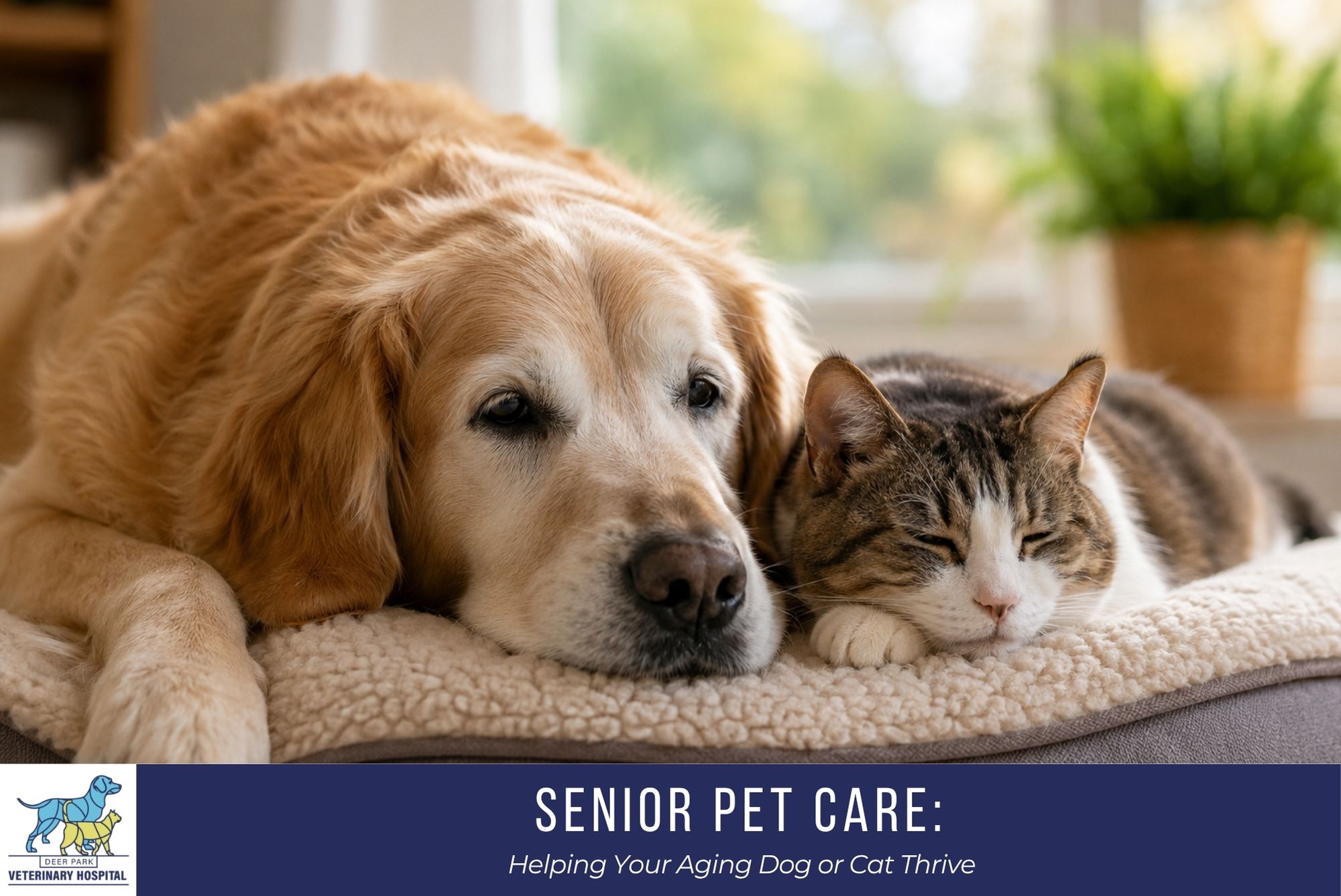
 As pets grow older, their needs change in ways that require thoughtful attention and proactive veterinary care. Thanks to advances in veterinary medicine, nutrition, and preventive healthcare, dogs and cats are living longer than ever before. While this is wonderful news for pet families, it also means that senior pets are more likely to experience age-related health conditions that benefit from early detection and ongoing management.
At Deer Park Veterinary Hospital, we are committed to helping senior dogs and cats enjoy their golden years with comfort, dignity, and the highest possible quality of life. Through routine wellness exams, personalized nutrition recommendations, pain management, and preventive care, our veterinary team partners with families to keep aging pets healthy and happy for as long as possible.
When Is a Pet Considered a Senior?
The age at which a pet becomes a senior varies based on species, breed, and size.
Senior Dogs
Small breeds often reach their senior years around 8 to 10 years of age, while medium-sized dogs typically become seniors around age 7. Large and giant breeds age more rapidly and may be considered seniors as early as 5 to 6 years old.
Senior Cats
Most cats are considered seniors beginning around 10 years of age, although subtle aging changes often begin earlier. Cats frequently hide signs of illness, making routine veterinary visits especially important.
How Aging Affects Dogs and Cats
Aging is a natural process that impacts nearly every body system. While some slowing down is expected, many symptoms that owners assume are “just old age” actually indicate treatable medical conditions.
Physical Changes
Senior pets commonly experience:
- Reduced energy levels
- Decreased muscle mass
- Weight gain or weight loss
- Graying fur
- Reduced vision
- Hearing loss
- Slower metabolism
- Weakened immune function
Many of these changes develop gradually, making them difficult to recognize without routine veterinary evaluations.
Behavioral Changes
Older pets may also exhibit behavioral changes such as:
- Increased sleeping
- Anxiety
- Confusion
- Changes in social interactions
- House-training accidents
- Altered eating habits
- Vocalizing more frequently
- Reduced interest in play
Behavioral changes should never be dismissed as normal aging without first ruling out underlying medical conditions.
Common Health Concerns in Senior Pets
As pets age, they become more susceptible to chronic diseases. Early diagnosis often allows treatment before significant complications develop.
Arthritis and Joint Disease
Arthritis is one of the most common health problems affecting senior dogs and cats. Joint inflammation causes stiffness, reduced mobility, and chronic discomfort.
Signs include:
- Difficulty standing
- Trouble climbing stairs
- Reluctance to jump
- Slower walks
- Limping
- Hesitation getting into vehicles
- Reduced activity
Cats often show arthritis differently by avoiding high surfaces, sleeping more, or becoming less active.
Fortunately, arthritis can often be managed with weight control, joint supplements, medications, rehabilitation therapies, and lifestyle modifications.
Kidney Disease
Chronic kidney disease is particularly common in older cats but can affect dogs as well.
Early symptoms include:
- Increased thirst
- Frequent urination
- Weight loss
- Poor appetite
- Vomiting
- Lethargy
Routine bloodwork and urine testing frequently identify kidney disease before obvious symptoms develop.
Heart Disease
Senior pets are at greater risk for heart disease.
Symptoms may include:
- Coughing
- Exercise intolerance
- Difficulty breathing
- Weakness
- Fainting
- Rapid breathing while resting
Early detection allows veterinarians to begin treatment before heart disease significantly impacts quality of life.
Diabetes
Diabetes occurs in both dogs and cats and often develops during middle age or later.
Signs include:
- Increased thirst
- Increased urination
- Weight loss
- Increased appetite
- Cataracts in dogs
- Weakness
Many diabetic pets enjoy excellent quality of life with proper management.
Cancer
Cancer becomes increasingly common with age.
Warning signs include:
- New lumps
- Weight loss
- Persistent sores
- Bleeding
- Difficulty eating
- Changes in bowel habits
- Persistent coughing
- Unexplained pain
Regular veterinary exams improve the likelihood of identifying tumors while treatment options are most effective.
Dental Disease
Dental disease affects the majority of senior pets and can contribute to infections throughout the body.
Signs include:
- Bad breath
- Loose teeth
- Bleeding gums
- Difficulty chewing
- Dropping food
- Facial swelling
Professional dental cleanings and routine oral examinations help maintain overall health.
Maintaining Healthy Mobility
Mobility plays a significant role in a senior pet’s overall well-being.
Weight Management
Maintaining a healthy body weight is one of the most effective ways to reduce stress on aging joints.
Even a few extra pounds increase pressure on the hips, knees, elbows, and spine, worsening arthritis and reducing mobility.
Appropriate Exercise
Senior pets still benefit from daily activity, although exercise should be adjusted for their comfort level.
Recommended activities include:
- Short walks
- Gentle play sessions
- Swimming for dogs when appropriate
- Interactive toys
- Light stretching exercises
- Controlled movement throughout the day
Consistent, moderate exercise helps preserve muscle mass and joint flexibility.
Home Modifications
Simple changes around the home can significantly improve comfort.
Helpful modifications include:
- Non-slip rugs
- Orthopedic pet beds
- Pet ramps
- Elevated food bowls
- Easy access to litter boxes
- Reduced stair use
- Warm sleeping areas
These adjustments help reduce strain on painful joints.
Nutrition Changes for Aging Pets
Senior pets have different nutritional requirements than younger animals.
Calorie Needs
Many senior pets become less active and require fewer calories to maintain a healthy weight.
Others lose muscle mass and require carefully balanced diets that support lean body condition.
Your veterinarian can recommend an appropriate feeding plan based on your pet’s health and activity level.
High-Quality Protein
Contrary to common myths, healthy senior pets often benefit from high-quality, highly digestible protein that helps preserve muscle while supporting immune function.
Pets with kidney disease or other medical conditions may require specialized prescription diets.
Joint Support
Many senior diets include nutrients that support joint health, including:
- Glucosamine
- Chondroitin sulfate
- Omega-3 fatty acids
- EPA and DHA
- Antioxidants
These ingredients can help reduce inflammation and improve mobility.
Brain Health
Certain nutrients help support cognitive function in aging pets.
Diets containing antioxidants, omega-3 fatty acids, and specialized brain-support nutrients may slow cognitive decline in some senior dogs and cats.
Cognitive Dysfunction in Senior Pets
Just as humans can experience age-related cognitive decline, dogs and cats may develop cognitive dysfunction syndrome.
Signs include:
- Confusion
- Wandering
- Staring at walls
- Sleep disturbances
- Increased nighttime activity
- Forgetting learned behaviors
- Reduced interaction with family
- Anxiety
Early diagnosis allows veterinarians to recommend environmental changes, nutritional support, supplements, and medications that may improve cognitive function.
The Importance of Routine Veterinary Checkups
Regular wellness visits become increasingly valuable as pets age.
Most veterinarians recommend senior wellness examinations every six months.
Comprehensive Physical Examinations
Routine exams evaluate:
- Body condition
- Weight changes
- Mobility
- Heart and lung function
- Vision
- Hearing
- Skin health
- Oral health
- Neurological function
These evaluations often detect subtle changes before they become major problems.
Diagnostic Testing
Preventive laboratory testing frequently includes:
- Complete blood count (CBC)
- Blood chemistry panel
- Urinalysis
- Blood pressure measurement
- Thyroid testing when indicated
- Fecal examinations
- Imaging studies when necessary
Many chronic diseases are easier to manage when diagnosed early.
Monitoring Quality of Life
Quality of life becomes an important consideration for every senior pet.
Signs Your Pet Is Enjoying Life
Healthy senior pets typically continue to:
- Eat well
- Enjoy family interaction
- Rest comfortably
- Move without severe pain
- Maintain interest in favorite activities
- Groom themselves appropriately
- Respond to affection
When to Talk with Your Veterinarian
Consult your veterinarian if your pet experiences:
- Persistent pain
- Significant weight loss
- Loss of appetite
- Difficulty standing
- Repeated falls
- Breathing problems
- Incontinence
- Confusion
- Withdrawal from family
- Loss of interest in daily activities
Compassionate veterinary guidance helps families make informed decisions while prioritizing their pet’s comfort and dignity.
How Preventive Care Supports Healthy Aging
Preventive healthcare remains important throughout a pet’s life.
Senior wellness plans often include:
- Vaccinations based on lifestyle and risk
- Parasite prevention
- Dental care
- Routine laboratory screening
- Nutrition counseling
- Pain management
- Chronic disease monitoring
- Weight management
- Behavioral evaluations
A proactive approach helps identify health concerns earlier and often leads to better long-term outcomes.
Partner with Deer Park Veterinary Hospital for Your Senior Pet’s Care
Your pet has spent years providing unconditional love and companionship. As they age, they deserve personalized veterinary care that supports every stage of life.
At Deer Park Veterinary Hospital, our experienced team provides comprehensive senior pet wellness exams, diagnostic testing, nutritional guidance, pain management, and preventive healthcare designed to help aging dogs and cats remain comfortable, active, and happy. Whether your companion is entering their senior years or managing a chronic condition, we are here to help you make informed decisions that promote lifelong health and quality of life.
Frequently Asked Questions
At what age should my pet begin senior wellness exams?
Many pets benefit from senior wellness care beginning around age 7 for dogs and age 10 for cats, although large-breed dogs often require earlier monitoring.
How often should senior pets visit the veterinarian?
Most senior pets should have veterinary examinations every six months. More frequent visits may be recommended for pets managing chronic medical conditions.
Is slowing down always a normal part of aging?
No. While some slowing is expected, many mobility changes result from treatable conditions such as arthritis, heart disease, or endocrine disorders.
What is the best food for senior pets?
The ideal diet depends on your pet’s age, breed, weight, activity level, and medical history. Your veterinarian can recommend a diet that supports healthy aging and addresses any chronic health concerns.
How can I tell if my pet is in pain?
Signs of pain include limping, difficulty standing, reluctance to jump, decreased activity, hiding, changes in appetite, excessive panting, or behavioral changes. Cats often show pain through subtle reductions in activity and grooming.
Should senior pets continue receiving vaccines?
Yes. Vaccination recommendations are based on your pet’s health, lifestyle, and risk factors. Your veterinarian can determine which vaccines remain appropriate.
Can arthritis be treated without surgery?
Yes. Many pets successfully manage arthritis with weight control, medications, supplements, physical rehabilitation, environmental modifications, and regular veterinary monitoring.
Why does my senior pet drink more water?
Increased thirst can indicate kidney disease, diabetes, hormonal disorders, or other medical conditions. Veterinary evaluation is recommended whenever drinking habits change.
What tests are recommended for senior pets?
Routine bloodwork, urinalysis, blood pressure monitoring, fecal examinations, and diagnostic imaging when indicated help detect many age-related diseases before symptoms become severe.
How can I improve my senior pet’s quality of life?
Regular veterinary care, proper nutrition, healthy weight management, appropriate exercise, comfortable bedding, pain management, mental enrichment, and a supportive home environment all contribute to a higher quality of life.
Contact Information
Deer Park Veterinary Hospital
4380 E Galbraith Rd
Cincinnati, OH 45236
Phone: (513) 791-8550
Website: https://dpvh.net
Request An Appointment: https://dpvh.net/appointments