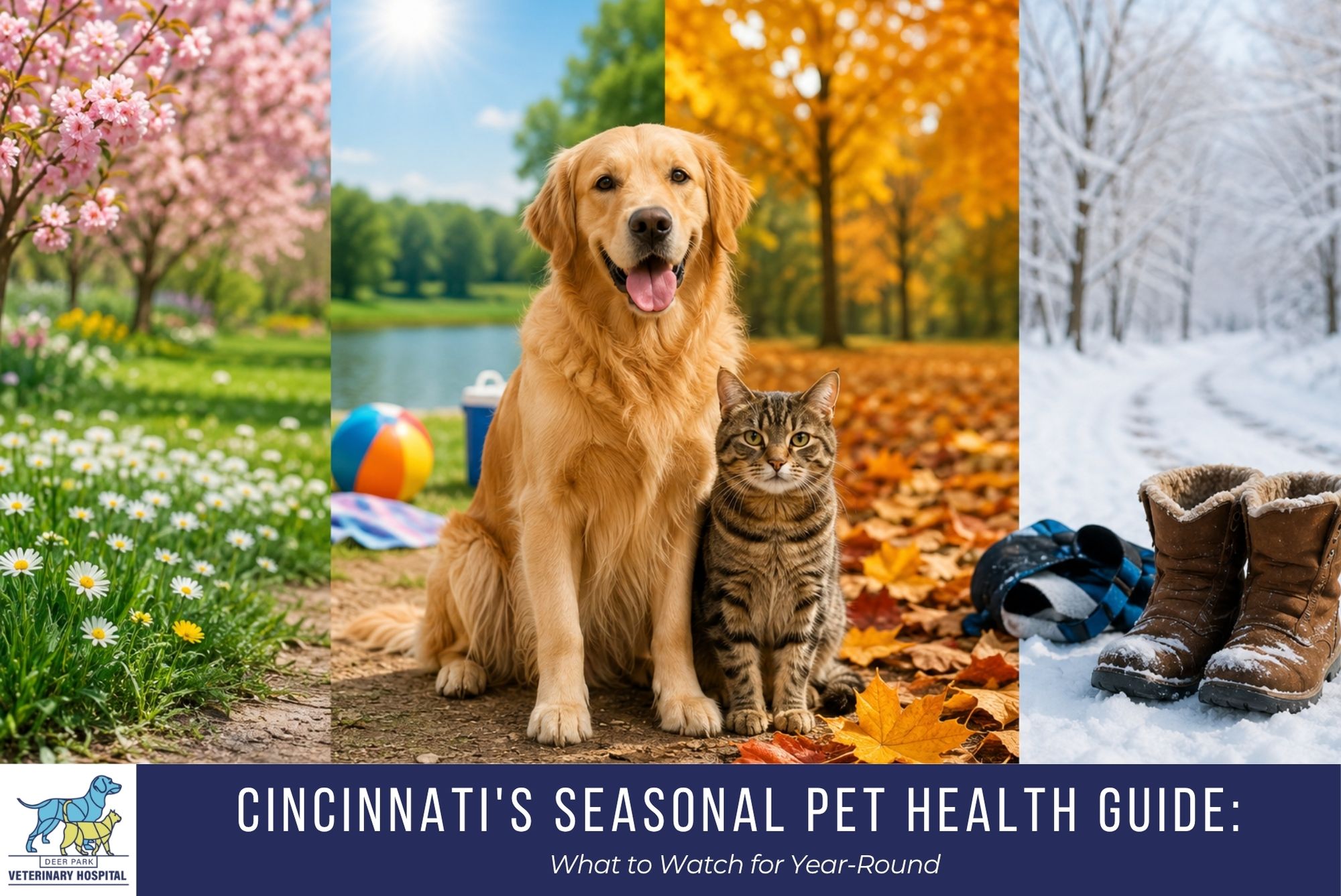
Every season in Cincinnati brings unique environmental changes that can affect your pet’s health. From the arrival of fleas and ticks in spring to dangerous summer heat, seasonal allergies in fall, and icy winter conditions, pets face different health risks throughout the year. Understanding these changing hazards allows pet owners to take proactive steps that help prevent illness, injury, and unnecessary veterinary emergencies.
At Deer Park Veterinary Hospital, we believe preventive veterinary care is one of the most effective ways to keep pets healthy year-round. By staying informed about seasonal risks and maintaining regular wellness visits, vaccinations, parasite prevention, and routine screenings, you can help your dog or cat enjoy every season safely.
Why Seasonal Preventive Care Matters
Many pet illnesses develop gradually or occur during predictable times of the year. Parasites, environmental allergens, temperature extremes, and changing outdoor conditions all contribute to seasonal health concerns that affect both dogs and cats.
Preventive care helps:
- Reduce exposure to parasites
- Detect illnesses before they become serious
- Prevent emergency situations
- Maintain healthy skin and coat
- Protect joints and mobility
- Support immune system function
- Improve overall quality of life
Rather than reacting after symptoms appear, seasonal preventive care focuses on reducing risk before problems develop.
Spring Pet Health in Cincinnati
Spring brings warmer temperatures, blooming plants, increased rainfall, and renewed outdoor activity. While pets enjoy spending more time outside, several health concerns emerge during this season.
Flea and Tick Season Begins
As temperatures consistently rise, fleas and ticks become active throughout the Cincinnati area.
Ticks can transmit diseases including:
- Lyme disease
- Ehrlichiosis
- Anaplasmosis
- Rocky Mountain spotted fever
Fleas can cause:
- Severe itching
- Flea allergy dermatitis
- Tapeworm infections
- Skin infections
- Anemia in severe infestations
Monthly parasite prevention should begin before parasite populations peak and continue throughout the year.
Heartworm Prevention Is Essential
Mosquitoes become active in spring, increasing the risk of heartworm disease.
Heartworm disease is transmitted through mosquito bites and affects both dogs and cats. Once infected, treatment can be lengthy, expensive, and potentially dangerous.
Year-round heartworm prevention remains the safest and most effective strategy.
Seasonal Allergies
Just like people, pets can develop allergies to:
- Tree pollen
- Grass pollen
- Weed pollen
- Mold spores
Signs of allergies include:
- Excessive scratching
- Licking paws
- Ear infections
- Red skin
- Hair loss
- Face rubbing
Early treatment helps reduce discomfort and prevent secondary skin infections.
Spring Cleaning Hazards
Household cleaners, fertilizers, herbicides, mulch, and pesticides become more common during spring landscaping.
Many of these products are toxic to pets and should always be stored safely and used according to manufacturer instructions.
Summer Pet Health in Cincinnati
Summer offers more opportunities for outdoor adventures but also presents some of the year’s greatest health risks.
Heatstroke
Heat-related illness is one of the most dangerous summer emergencies.
Pets cool themselves much less efficiently than humans, making them vulnerable to overheating.
Signs of heatstroke include:
- Heavy panting
- Excessive drooling
- Bright red gums
- Weakness
- Vomiting
- Collapse
- Confusion
Heatstroke requires immediate veterinary attention.
Safe Exercise During Hot Weather
Exercise pets:
- Early morning
- Late evening
- In shaded areas
- Near fresh water
Avoid strenuous exercise during peak afternoon temperatures.
Hot Pavement Burns
Concrete and asphalt can become hot enough to burn paw pads within minutes.
Before walking your dog, place the back of your hand on the pavement for several seconds. If it feels too hot for your skin, it is too hot for your pet’s paws.
Water Safety
Swimming is excellent exercise but requires supervision.
Always:
- Supervise pets around pools
- Rinse lake water from the coat
- Watch for blue-green algae
- Provide clean drinking water
- Use life jackets for boating
Blue-green algae can produce toxins that become life-threatening even after minimal exposure.
Fireworks and Anxiety
Many pets experience severe anxiety during summer fireworks.
Helpful strategies include:
- Providing a quiet indoor room
- Playing calming background music
- Closing windows and curtains
- Using veterinarian-recommended anxiety therapies when appropriate
Ensure identification tags and microchip information remain current in case frightened pets escape.
Fall Pet Health Considerations
As temperatures cool, several seasonal risks remain.
Fleas and Ticks Continue
Many owners mistakenly stop parasite prevention too early.
Ticks remain active during much of the fall and even mild winter days.
Year-round prevention remains the recommendation for pets living in Ohio.
Seasonal Allergies Continue
Ragweed and mold spores often peak during autumn.
Pets with seasonal allergies may continue experiencing:
- Ear infections
- Itchy skin
- Paw licking
- Hot spots
Veterinary management helps minimize chronic inflammation.
Wildlife Encounters
Wildlife activity increases during fall.
Pets may encounter:
- Raccoons
- Skunks
- Coyotes
- Snakes
- Rodents
Keeping pets leashed and supervised reduces the risk of bites, scratches, and disease exposure.
Mushroom Safety
Wild mushrooms appear after autumn rain.
Some mushroom species are highly toxic and can cause:
- Vomiting
- Liver failure
- Neurologic symptoms
- Kidney damage
Never allow pets to eat mushrooms found outdoors.
Winter Pet Health in Cincinnati
Cold temperatures create their own unique hazards.
Cold Weather Exposure
Not every pet tolerates cold temperatures equally.
Higher-risk pets include:
- Small breeds
- Senior pets
- Puppies
- Kittens
- Short-haired breeds
- Pets with arthritis
Limit outdoor exposure during extremely cold weather.
Ice Melt and Chemical Hazards
Many de-icing products can irritate paws or become toxic if ingested during grooming.
After walks:
- Wipe paws clean
- Dry between toes
- Remove ice balls
- Check for cracks or injuries
Antifreeze Poisoning
Ethylene glycol antifreeze has a sweet taste but is extremely toxic.
Even small amounts can cause:
- Kidney failure
- Neurologic signs
- Death without immediate treatment
Clean spills immediately and store antifreeze securely.
Dry Indoor Air
Indoor heating reduces humidity, contributing to:
- Dry skin
- Increased itching
- Static electricity
- Brittle coats
Proper nutrition and veterinary-recommended skin care products help support healthy skin during winter.
Seasonal Nutrition Adjustments
Activity levels often fluctuate throughout the year.
Some pets become more active during warmer months, while others exercise less during winter.
Regular weight monitoring helps prevent obesity while ensuring pets receive adequate nutrition for their activity level.
Your veterinarian can recommend dietary adjustments based on:
- Age
- Breed
- Lifestyle
- Body condition
- Medical history
Maintaining Parasite Prevention Throughout the Year
Many parasites remain active beyond what owners expect.
Veterinarians increasingly recommend year-round protection against:
- Fleas
- Ticks
- Heartworms
- Intestinal parasites
Routine fecal testing and annual heartworm screening help identify infections early.
Wellness Exams Every Season
Routine wellness examinations allow veterinarians to detect subtle health changes before pets show obvious symptoms.
Regular exams may include:
- Comprehensive physical examination
- Weight assessment
- Dental evaluation
- Parasite screening
- Vaccination review
- Blood work when appropriate
- Nutrition counseling
- Behavioral assessment
Early detection often leads to simpler treatment and improved long-term outcomes.
Protecting Senior Pets Through Seasonal Changes
Older pets often experience greater sensitivity to changing weather.
Cold weather may worsen arthritis symptoms, while hot weather can reduce exercise tolerance.
Senior wellness care may include:
- Joint health evaluations
- Pain management
- Mobility support
- Weight monitoring
- Blood pressure screening
- Laboratory testing
- Customized exercise recommendations
Monitoring seasonal changes helps maintain comfort and mobility throughout the year.
Building a Year-Round Preventive Health Plan
The best protection against seasonal health risks is a personalized preventive care plan developed with your veterinarian.
A comprehensive annual health strategy includes:
- Wellness examinations
- Vaccinations
- Parasite prevention
- Dental care
- Nutritional guidance
- Diagnostic screenings
- Allergy management
- Senior care when appropriate
Working closely with your veterinary team allows you to anticipate seasonal risks rather than reacting to emergencies.
At Deer Park Veterinary Hospital, we are committed to helping Cincinnati-area families keep their pets healthy through every season. Whether your pet needs preventive care, allergy treatment, parasite protection, wellness exams, or guidance on seasonal health concerns, our experienced veterinary team is here to provide compassionate, individualized care throughout the year.
Frequently Asked Questions
Should my pet stay on flea and tick prevention all year in Cincinnati?
Yes. Fleas and ticks can remain active during mild weather, and indoor environments allow parasites to survive year-round. Continuous prevention offers the best protection.
How can I tell if my pet has seasonal allergies?
Common signs include itchy skin, excessive scratching, licking paws, recurrent ear infections, red skin, and hair loss. A veterinary examination helps determine whether allergies or another condition is responsible.
How hot is too hot for walking my dog?
If pavement is too hot to comfortably touch with your hand for several seconds, it is too hot for your dog’s paws. During hot weather, choose early morning or evening walks.
Is heartworm prevention necessary during winter?
Yes. Veterinarians recommend year-round heartworm prevention because maintaining consistent protection is safer and more effective than stopping seasonally.
Can cold weather worsen arthritis?
Yes. Many pets with arthritis experience increased stiffness and discomfort during colder months. Your veterinarian can recommend medications, supplements, weight management, and exercise modifications to improve comfort.
What should I do if my pet eats antifreeze?
Seek emergency veterinary care immediately. Antifreeze poisoning progresses rapidly and requires prompt treatment to improve the chances of recovery.
Are blue-green algae dangerous for dogs?
Yes. Blue-green algae produce toxins that can cause severe liver and neurologic damage. Keep pets away from water with visible algae blooms and contact a veterinarian immediately if exposure occurs.
How often should my pet have a wellness exam?
Most healthy adult pets benefit from annual wellness exams. Puppies, kittens, senior pets, and pets with chronic medical conditions often require more frequent visits.
How can I protect my pet during fireworks?
Keep pets indoors, provide a quiet safe space, ensure identification tags and microchip information are current, and discuss anxiety treatment options with your veterinarian if needed.
When should I schedule a seasonal health check?
Any time is appropriate, but many owners schedule wellness visits in spring before parasite season or in fall to prepare for winter health needs.
Contact Information
Deer Park Veterinary Hospital
4380 E Galbraith Rd
Cincinnati, OH 45236
Phone: (513) 791-8550
Website: https://dpvh.net
Request An Appointment: https://dpvh.net/appointments