
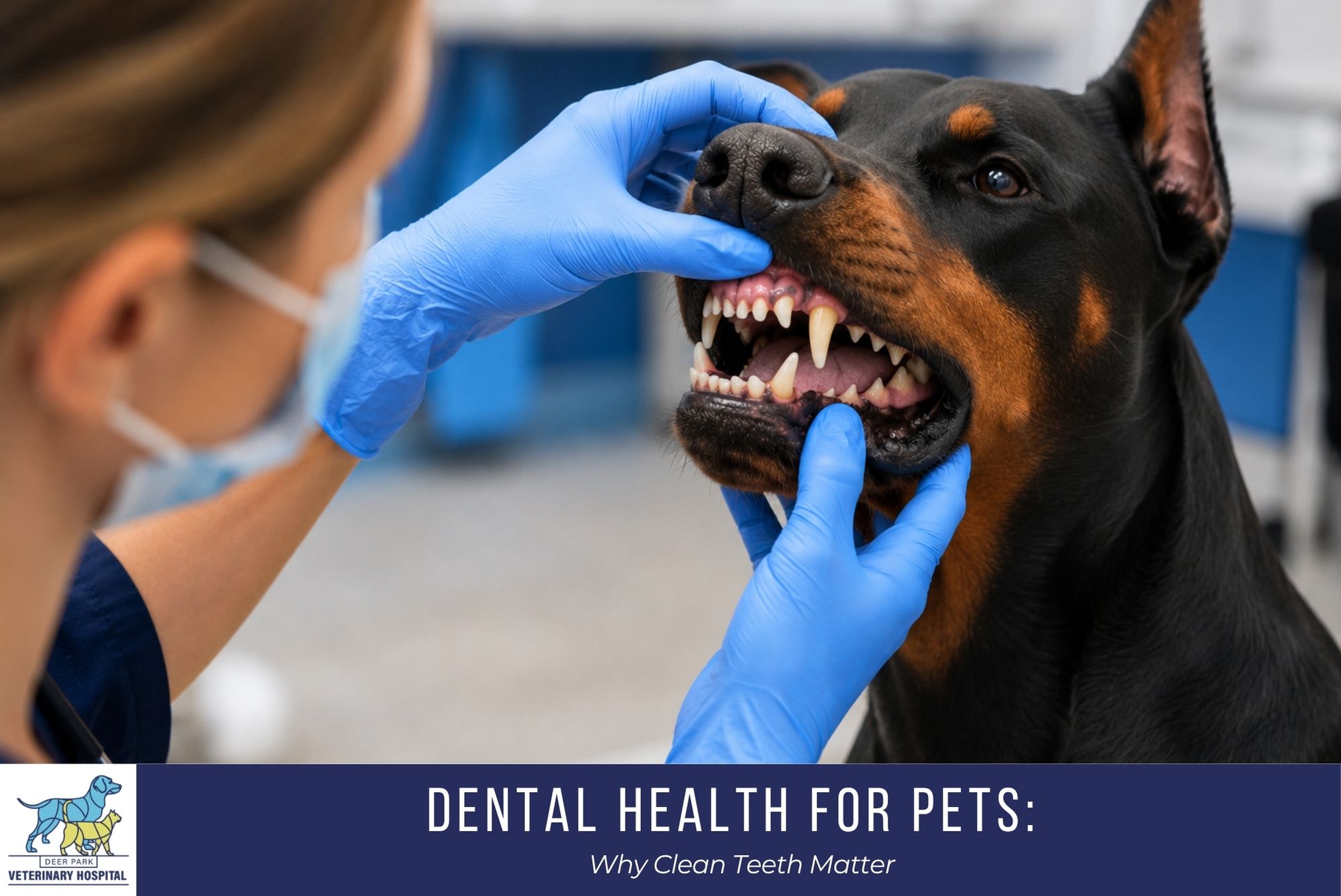
Your pet’s oral health plays a vital role in their overall well-being. While many pet owners focus on vaccinations, nutrition, and exercise, dental care is often overlooked until noticeable problems develop. Unfortunately, dental disease is one of the most common medical conditions affecting both dogs and cats, and it can have far-reaching effects beyond the mouth.
At Deer Park Veterinary Hospital, we believe preventive dental care is one of the most important investments you can make in your pet’s long-term health. Routine dental exams, professional cleanings, and good home care help prevent pain, preserve healthy teeth, and reduce the risk of serious health complications associated with periodontal disease.
Whether you have a playful puppy, an aging senior dog, a curious kitten, or an adult cat, understanding the importance of pet dental health can help your companion live a healthier, happier life.
Why Dental Health Matters for Dogs and Cats
A healthy mouth is essential for eating, grooming, playing, and living comfortably. When plaque and tartar accumulate on the teeth, bacteria begin to invade the gums, eventually leading to periodontal disease. As this disease progresses, it damages the tissues supporting the teeth and creates chronic inflammation throughout the body.
Poor dental health can affect far more than your pet’s smile. Chronic oral infections have been associated with damage to the:
- Heart
- Kidneys
- Liver
- Immune system
Preventive veterinary dentistry helps reduce these risks while improving your pet’s quality of life.
Understanding Plaque, Tartar, and Periodontal Disease
Dental disease develops gradually, often without obvious symptoms during its early stages.
Plaque Formation
Plaque is a sticky film composed of bacteria, food particles, and saliva. It begins forming on teeth within hours after eating.
If plaque is not removed through brushing or professional cleaning, it hardens into tartar.
Tartar Buildup
Tartar (dental calculus) is a hardened mineral deposit that firmly adheres to the teeth. Unlike plaque, tartar cannot be removed with brushing alone.
Tartar creates a rough surface where additional bacteria accumulate, accelerating gum disease.
Gingivitis
Gingivitis is the earliest stage of periodontal disease.
Signs include:
- Red gums
- Swollen gums
- Mild bleeding
- Bad breath
At this stage, the condition is typically reversible with professional dental treatment and improved home care.
Periodontal Disease
As bacteria spread beneath the gumline, they destroy the tissues and bone supporting the teeth.
Advanced periodontal disease can cause:
- Loose teeth
- Tooth loss
- Bone destruction
- Chronic pain
- Oral infections
- Difficulty eating
Once bone loss occurs, it cannot be reversed, making early treatment especially important.
Common Dental Problems in Pets
Dogs and cats can develop several oral health conditions throughout their lives.
Periodontal Disease
The most common dental disease seen in veterinary medicine.
Broken or Fractured Teeth
Chewing hard toys, bones, rocks, or antlers can fracture teeth, exposing sensitive nerves and increasing the risk of infection.
Tooth Root Abscesses
Bacterial infections may develop beneath damaged teeth, causing severe pain and facial swelling.
Retained Baby Teeth
Some young dogs fail to lose all of their baby teeth, leading to overcrowding and improper bite alignment.
Tooth Resorption in Cats
Cats commonly develop tooth resorption, a painful condition where the tooth structure gradually breaks down.
Affected teeth usually require extraction.
Oral Tumors
Masses within the mouth should always be evaluated promptly by a veterinarian.
Early diagnosis greatly improves treatment options.
Signs Your Pet May Have Dental Disease
Pets instinctively hide pain, making routine veterinary examinations especially valuable.
Watch for these warning signs:
- Persistent bad breath
- Yellow or brown tartar buildup
- Red or bleeding gums
- Excessive drooling
- Difficulty chewing
- Dropping food while eating
- Preference for soft foods
- Pawing at the mouth
- Facial swelling
- Loose or missing teeth
- Weight loss
- Decreased appetite
- Behavioral changes
- Irritability when the face is touched
If your pet displays any of these symptoms, schedule a dental examination as soon as possible.
Which Pets Are Most at Risk?
Although every pet can develop dental disease, certain factors increase risk.
Small Breed Dogs
Smaller breeds often develop periodontal disease earlier because their teeth are crowded together.
Breeds commonly affected include:
- Yorkshire Terriers
- Chihuahuas
- Toy Poodles
- Dachshunds
- Maltese
- Shih Tzus
Senior Pets
As pets age, plaque accumulation and gum disease naturally become more common.
Routine dental evaluations become increasingly important during the senior years.
Cats
Many cat owners never realize their pet has painful dental disease because cats continue eating despite significant discomfort.
Regular veterinary dental examinations are essential for feline patients.
The Benefits of Professional Veterinary Dental Cleanings
Professional dental cleanings provide much more than cosmetic improvements.
They help:
- Remove plaque and tartar
- Eliminate bacteria beneath the gumline
- Prevent tooth loss
- Reduce oral pain
- Improve breath
- Detect hidden dental disease
- Identify oral tumors early
- Protect internal organ health
- Extend overall quality of life
Routine cleanings are one of the most effective preventive services available in veterinary medicine.
What Happens During a Professional Pet Dental Cleaning?
Veterinary dental cleanings are performed under general anesthesia to ensure your pet’s comfort, safety, and complete evaluation.
Pre-Anesthetic Examination
Your veterinarian performs a comprehensive physical examination and may recommend laboratory testing to evaluate your pet’s health before anesthesia.
General Anesthesia
Anesthesia allows a thorough examination while keeping your pet pain-free and preventing movement.
Unlike awake dental cleanings, anesthesia permits complete cleaning beneath the gumline where periodontal disease develops.
Dental Radiographs (X-Rays)
Many dental problems occur below the gumline and cannot be seen during a visual examination.
Dental radiographs help identify:
- Tooth root infections
- Bone loss
- Fractures
- Retained roots
- Tooth resorption
- Hidden abscesses
Scaling and Polishing
Specialized dental instruments remove plaque and tartar from every tooth.
The teeth are then polished to create a smooth surface that slows future plaque accumulation.
Dental Treatment
If diseased or damaged teeth are discovered, your veterinarian discusses the most appropriate treatment, which may include extractions or additional procedures.
Why Anesthesia-Free Dental Cleanings Are Not Recommended
Some facilities advertise anesthesia-free pet dental cleanings.
While these procedures may improve the appearance of visible teeth, they do not effectively treat periodontal disease.
Without anesthesia, providers cannot:
- Clean beneath the gumline
- Perform dental radiographs
- Fully examine every tooth
- Safely remove diseased tissue
- Treat painful dental conditions
Professional veterinary dental care remains the gold standard for maintaining oral health.
How to Care for Your Pet’s Teeth at Home
Home dental care significantly improves long-term oral health between professional cleanings.
Brush Your Pet’s Teeth
Daily brushing remains the most effective home care method.
Use only veterinary-approved toothpaste, as human toothpaste contains ingredients that can be harmful to pets.
Dental Diets
Specially formulated veterinary dental diets help reduce plaque and tartar accumulation.
Dental Chews
Veterinary-approved dental chews can assist in controlling plaque while providing enrichment.
Always choose products appropriate for your pet’s size and chewing habits.
Dental Water Additives
Some veterinary-approved water additives help reduce oral bacteria and improve breath.
Regular Veterinary Checkups
Routine examinations allow your veterinarian to monitor oral health and recommend cleanings before serious disease develops.
How Often Should Pets Have Dental Cleanings?
There is no universal schedule because every pet has different dental needs.
Some small breed dogs require professional cleanings annually or even more frequently.
Other pets with excellent oral health may need cleanings less often.
Your veterinarian develops an individualized dental care plan based on your pet’s:
- Age
- Breed
- Oral examination
- Medical history
- Plaque accumulation
- Periodontal health
Preventive Dental Care Saves Money
Preventive dentistry often costs far less than treating advanced dental disease.
Routine cleanings help avoid:
- Multiple tooth extractions
- Severe oral infections
- Emergency dental procedures
- Chronic pain management
- Complicated oral surgery
Investing in preventive care improves your pet’s comfort while reducing future medical expenses.
Make Dental Health Part of Your Pet’s Wellness Routine
Dental care is not simply about keeping your pet’s teeth clean—it is about protecting their overall health, preventing chronic pain, and helping them enjoy every stage of life.
At Deer Park Veterinary Hospital, our veterinary team provides comprehensive dental examinations, professional cleanings, digital dental imaging, and personalized preventive care recommendations tailored to your pet’s unique needs.
If your pet has bad breath, visible tartar, difficulty eating, or has not had a dental evaluation recently, now is the perfect time to schedule an appointment.
Frequently Asked Questions
How common is dental disease in pets?
Dental disease is one of the most common medical conditions seen in dogs and cats. By three years of age, many pets show some degree of periodontal disease.
Is bad breath normal for pets?
No. Persistent bad breath is usually a sign of bacterial buildup, gum disease, or another dental problem that should be evaluated by a veterinarian.
How often should I brush my pet’s teeth?
Daily brushing provides the greatest protection against plaque buildup. Even brushing several times per week offers meaningful benefits.
Can my pet eat normally with dental disease?
Many pets continue eating despite significant oral pain. Animals instinctively hide discomfort, making routine dental exams especially important.
Are dental X-rays really necessary?
Yes. Most dental disease develops beneath the gumline, where it cannot be seen during a visual examination. Dental radiographs help identify hidden infections, fractures, and bone loss.
Are professional dental cleanings safe?
Professional dental cleanings are considered very safe when performed by a veterinary team using appropriate anesthesia protocols, monitoring equipment, and pre-anesthetic evaluations.
What age should my pet begin dental care?
Dental care should begin during puppyhood and kittenhood through home brushing, regular examinations, and preventive veterinary guidance.
Can dental disease affect my pet’s heart or kidneys?
Yes. Chronic oral infections allow bacteria to enter the bloodstream, potentially affecting the heart, kidneys, liver, and other organs over time.
Are dental treats enough to keep my pet’s teeth healthy?
Dental treats can help reduce plaque, but they should supplement—not replace—daily brushing and professional veterinary dental care.
How do I know when my pet needs a professional cleaning?
Your veterinarian determines the ideal timing based on your pet’s examination, tartar buildup, gum health, breed, age, and overall oral condition.
Contact Information
Deer Park Veterinary Hospital
4380 E Galbraith Rd
Cincinnati, OH 45236
Phone: (513) 791-8550
Website: https://dpvh.net
Request an Appointment: https://dpvh.net/appointments