
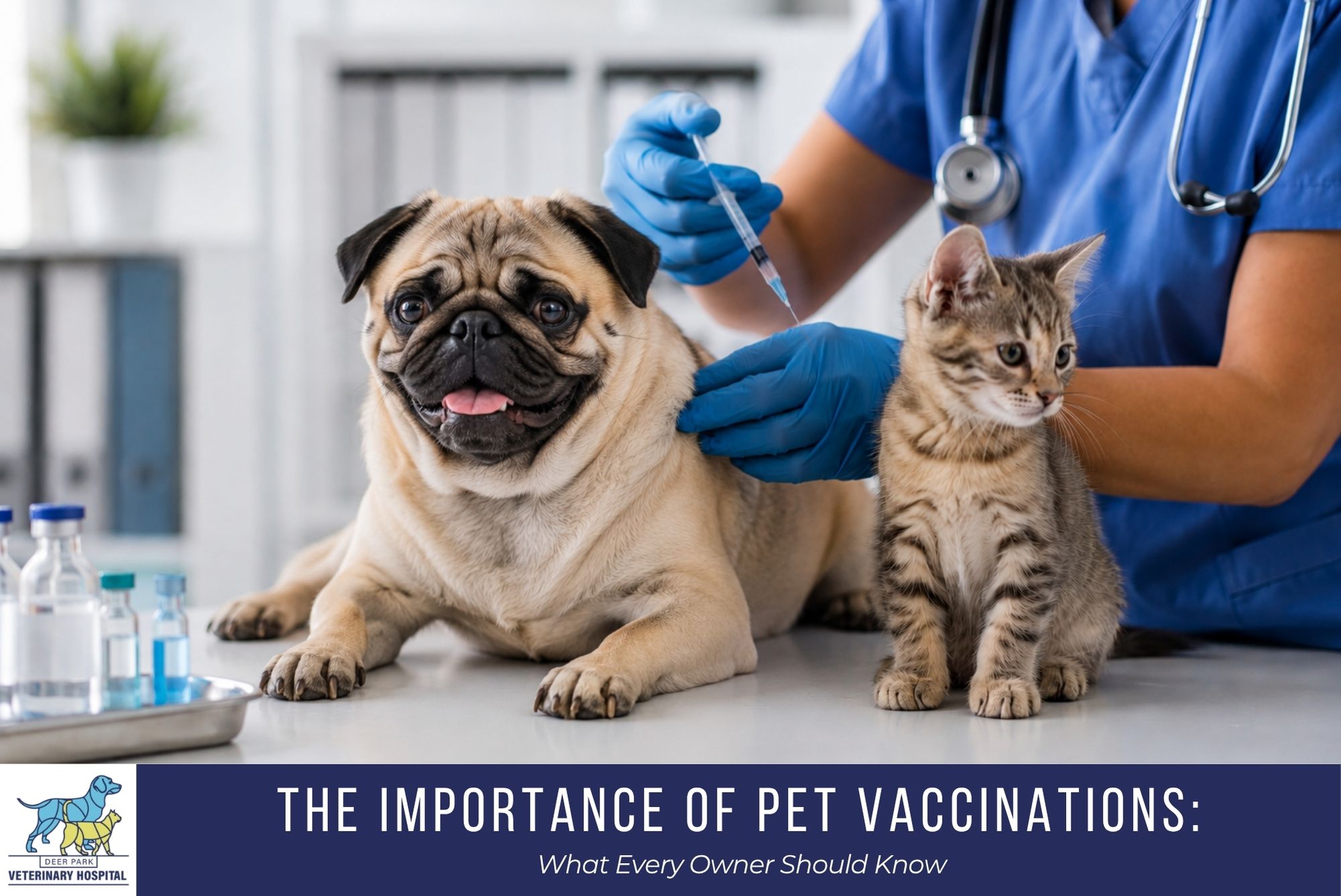
Pet vaccinations are one of the most effective ways to protect your dog or cat from serious, potentially life-threatening diseases. Vaccines have dramatically reduced the prevalence of many infectious illnesses that once caused widespread illness and death among companion animals. Today, routine vaccination remains a cornerstone of preventive veterinary medicine, helping pets live longer, healthier lives while also protecting other animals and people within the community.
Many pet owners have questions about which vaccines are necessary, how often they should be given, and whether indoor pets need vaccinations. The answers depend on several factors, including your pet’s age, lifestyle, travel habits, exposure risk, and overall health. At Deer Park Veterinary Hospital, every vaccination plan is tailored to the individual pet, ensuring they receive the protection they need without unnecessary treatments.
Understanding the difference between core and non-core vaccines can help pet owners make informed decisions and appreciate why vaccination schedules are recommended throughout every stage of life.
Why Pet Vaccinations Matter
Vaccines prepare your pet’s immune system to recognize and fight dangerous infectious diseases before exposure occurs. Rather than treating diseases after infection, vaccines help prevent illness altogether or significantly reduce the severity of disease.
Vaccination benefits include:
- Preventing serious infectious diseases
- Reducing hospitalization and emergency veterinary visits
- Lowering long-term medical costs
- Protecting vulnerable puppies and kittens
- Helping senior pets maintain better health
- Reducing disease transmission among animals
- Protecting public health from certain zoonotic diseases
Vaccination programs have nearly eliminated several devastating diseases in many parts of the United States, but these diseases continue to exist. Without ongoing vaccination efforts, outbreaks can quickly return.
How Vaccines Work
Vaccines expose the immune system to a harmless form or component of a disease-causing organism. This allows the immune system to produce protective antibodies and immune memory without causing the actual disease.
If your pet encounters the real virus or bacteria in the future, their immune system recognizes it immediately and mounts a much faster, stronger defense.
This immune response often prevents infection entirely or greatly reduces the severity of illness.
Understanding Core vs. Non-Core Vaccines
Vaccines are generally divided into two categories:
Core Vaccines
Core vaccines are recommended for nearly all pets because they protect against highly contagious, widespread, or potentially fatal diseases.
These vaccines are considered essential regardless of lifestyle.
Non-Core Vaccines
Non-core vaccines are recommended based on an individual pet’s risk factors.
Your veterinarian considers factors such as:
- Geographic location
- Boarding frequency
- Grooming visits
- Dog park attendance
- Outdoor activities
- Wildlife exposure
- Travel
- Hunting or working activities
- Household with multiple pets
- Existing medical conditions
These vaccines provide targeted protection for pets with increased exposure risk.
Core Vaccines for Dogs
Rabies Vaccine
Rabies is a fatal viral disease that affects the nervous system of mammals, including humans.
Rabies vaccination is legally required in most states because it protects both pets and public health.
The rabies vaccine provides protection against:
- Fatal neurological disease
- Transmission to humans
- Transmission to wildlife
- Community outbreaks
DHPP Vaccine
Often called the canine distemper combination vaccine, DHPP protects against four major diseases:
Canine Distemper
A highly contagious viral disease affecting the respiratory, gastrointestinal, and nervous systems.
Canine Adenovirus (Hepatitis)
Protects against infectious canine hepatitis, which affects the liver and other organs.
Canine Parvovirus
A severe intestinal virus causing vomiting, bloody diarrhea, dehydration, and frequently death in unvaccinated puppies.
Parainfluenza
A respiratory virus that contributes to canine infectious respiratory disease complex, commonly called kennel cough.
Non-Core Vaccines for Dogs
Depending on your dog’s lifestyle, your veterinarian may recommend additional vaccines.
Bordetella Bronchiseptica
Commonly recommended for dogs that:
- Visit boarding facilities
- Attend daycare
- Visit groomers
- Participate in training classes
- Visit dog parks
- Attend dog shows
This vaccine helps reduce the risk of kennel cough.
Leptospirosis
Leptospirosis is a bacterial disease spread through contaminated water, soil, and wildlife urine.
Dogs that spend time outdoors, hike, camp, or live near wildlife often benefit from vaccination.
Because leptospirosis can also infect humans, vaccination helps protect both pets and families.
Lyme Disease Vaccine
Recommended for dogs living in or traveling to areas where ticks carrying Lyme disease are common.
Vaccination is often combined with year-round tick prevention.
Canine Influenza Vaccine
Dogs that frequently interact with other dogs may benefit from protection against canine influenza, especially during outbreaks or before boarding.
Core Vaccines for Cats
Rabies Vaccine
Rabies vaccination is recommended for nearly every cat, including many indoor cats, because accidental exposure to bats or wildlife can occur.
Rabies vaccination also complies with local regulations.
FVRCP Vaccine
This combination vaccine protects against three important feline diseases.
Feline Viral Rhinotracheitis (Herpesvirus)
Causes upper respiratory infections, eye disease, and chronic respiratory symptoms.
Calicivirus
Produces respiratory illness, oral ulcers, and sometimes severe systemic disease.
Panleukopenia
A highly contagious virus causing severe gastrointestinal disease, immune suppression, and often fatal infections in kittens.
Non-Core Vaccines for Cats
Feline Leukemia Virus (FeLV)
The FeLV vaccine is recommended for:
- Kittens
- Outdoor cats
- Cats that spend time outdoors
- Cats living with infected cats
- Cats with unknown exposure history
Feline leukemia suppresses the immune system and increases the risk of cancer and secondary infections.
Your veterinarian will evaluate whether ongoing vaccination is appropriate as your cat’s lifestyle changes.
Puppy and Kitten Vaccination Schedules
Young animals receive temporary protection from antibodies passed through their mother’s milk.
As these maternal antibodies decrease, puppies and kittens become vulnerable to disease.
Because maternal antibodies fade at different rates, vaccines are administered in a series.
Typical Puppy Schedule
Puppies generally begin vaccinations around 6 to 8 weeks of age.
Boosters are typically given every 3 to 4 weeks until approximately 16 weeks of age.
Rabies vaccination is administered according to state law and veterinary recommendations.
Typical Kitten Schedule
Kittens also begin vaccinations around 6 to 8 weeks of age.
Booster vaccines continue every 3 to 4 weeks until approximately 16 weeks of age.
Rabies vaccination is added based on age requirements and local regulations.
Why Adult Pets Still Need Vaccinations
Vaccination is not just for puppies and kittens.
Immunity decreases over time, making booster vaccinations important throughout adulthood.
Adult vaccination schedules vary depending on:
- Vaccine type
- Age
- Health status
- Previous vaccine history
- Risk of exposure
- Manufacturer recommendations
- Current veterinary guidelines
Your veterinarian develops a personalized schedule that provides continued protection without over-vaccination.
Are Indoor Pets Really at Risk?
Many owners believe indoor pets do not require vaccinations.
While indoor pets generally face lower exposure risks, they are not completely protected.
Indoor pets may still encounter disease through:
- Open doors or windows
- Wildlife entering the home
- Veterinary visits
- Boarding
- Grooming
- Emergency escapes
- New pets entering the household
Vaccination recommendations for indoor pets are individualized based on realistic exposure risks.
Vaccine Safety
Modern veterinary vaccines undergo extensive testing for safety and effectiveness before approval.
Most pets experience no side effects beyond mild soreness or temporary fatigue.
Common Mild Reactions
Normal temporary reactions may include:
- Mild sleepiness
- Slight soreness at the injection site
- Temporary decrease in appetite
- Mild swelling
These signs usually resolve within one or two days.
Rare Vaccine Reactions
Serious reactions are uncommon but require immediate veterinary attention.
Contact your veterinarian immediately if your pet develops:
- Facial swelling
- Difficulty breathing
- Repeated vomiting
- Severe lethargy
- Collapse
- Hives
Prompt treatment is highly effective for most vaccine reactions.
Vaccinations Protect the Entire Community
Vaccination does more than protect individual pets.
High vaccination rates reduce disease spread throughout neighborhoods, boarding facilities, shelters, rescue organizations, and veterinary hospitals.
This concept, often called community immunity, helps protect:
- Young puppies and kittens
- Senior pets
- Pets with compromised immune systems
- Animals unable to receive certain vaccines
- Wildlife populations
- Human family members from zoonotic diseases such as rabies and leptospirosis
Responsible vaccination benefits both individual pets and the larger community.
The Importance of Annual Wellness Visits
Vaccinations are only one component of preventive healthcare.
Annual or semiannual wellness examinations allow veterinarians to:
- Review vaccination needs
- Detect disease early
- Monitor weight
- Perform physical examinations
- Discuss nutrition
- Recommend parasite prevention
- Evaluate dental health
- Update lifestyle recommendations
These visits ensure your pet receives comprehensive care throughout every stage of life.
Personalized Vaccination Plans Provide the Best Protection
No two pets have identical healthcare needs.
A puppy attending daycare has different vaccination requirements than a senior dog who stays primarily at home. Likewise, an indoor-only cat may need a different preventive care plan than a cat with outdoor access.
At Deer Park Veterinary Hospital, vaccination recommendations are based on current veterinary guidelines, your pet’s medical history, age, lifestyle, travel habits, and individual risk factors. Our team works closely with every pet owner to develop a customized preventive care plan that provides effective protection while supporting long-term health and well-being.
Frequently Asked Questions
Are vaccines really necessary if my pet stays indoors?
Yes. Indoor pets can still be exposed to infectious diseases through accidental escapes, wildlife, veterinary visits, grooming facilities, boarding, and contact with other animals. Your veterinarian will determine which vaccines are appropriate based on your pet’s specific lifestyle.
How often does my pet need vaccines?
The schedule varies depending on the vaccine, your pet’s age, health, previous vaccinations, and risk factors. Some vaccines require annual boosters, while others provide protection for longer intervals.
Can my pet become sick from a vaccine?
Vaccines cannot cause the diseases they are designed to prevent. Mild soreness or temporary tiredness can occur, but serious reactions are rare.
Why do puppies and kittens need multiple vaccines?
Young animals receive temporary antibodies from their mother that gradually decline. Multiple vaccinations help ensure immunity develops once maternal protection fades.
What happens if my pet misses a booster?
Your veterinarian can determine whether your pet simply needs a booster or whether the vaccination series should be restarted based on current veterinary guidelines and the length of time since the last vaccination.
Are vaccine side effects common?
Most pets experience little to no reaction. Mild soreness or fatigue may occur for a day or two. Severe allergic reactions are uncommon but require immediate veterinary care.
Does my senior pet still need vaccinations?
Yes. Senior pets still benefit from disease protection, although their vaccination schedule may be adjusted based on age, health conditions, and lifestyle.
Is the rabies vaccine required by law?
In many states and municipalities, including many communities in Ohio, rabies vaccination is required by law. Your veterinarian can advise you on local requirements and keep your pet up to date.
Can vaccines replace routine wellness care?
No. Vaccinations are only one part of preventive medicine. Regular wellness examinations help detect illnesses early, monitor your pet’s health, and ensure they receive comprehensive preventive care.
How can I determine which non-core vaccines my pet needs?
Your veterinarian will evaluate your pet’s lifestyle, travel habits, exposure to other animals, boarding or daycare attendance, outdoor activities, and local disease risks to recommend the most appropriate vaccines.
Contact Information
Deer Park Veterinary Hospital
4380 E Galbraith Rd
Cincinnati, OH 45236
Phone: (513) 791-8550
Website: https://dpvh.net
Request An Appointment: https://dpvh.net/appointments